Tesco and Adobe Forge Strategic Alliance to Revolutionize UK Grocery Shopping with Advanced AI Personalization

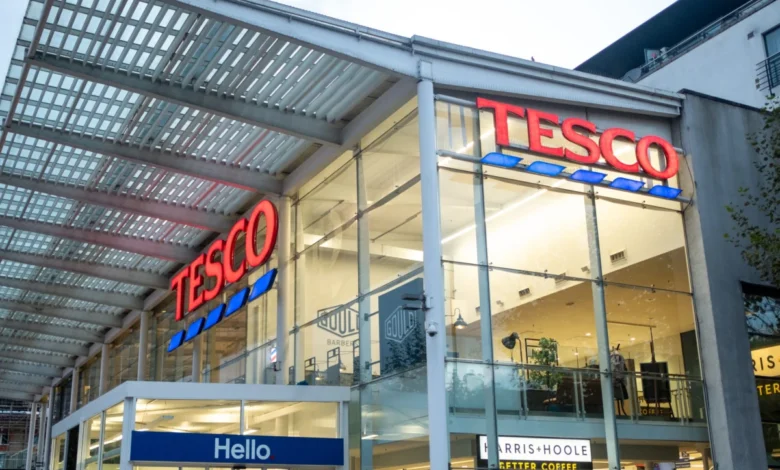
In a landmark collaboration poised to redefine the future of retail, U.K. grocery behemoth Tesco has officially partnered with U.S. software titan Adobe. This strategic alliance aims to infuse supermarket shopping with cutting-edge artificial intelligence, promising an unprecedented level of personalization and ease for millions of customers. The partnership underscores a significant pivot in the retail sector, where AI-driven experiences are rapidly evolving from a competitive edge to a fundamental expectation.
The core of this transformative initiative centers on Tesco’s integration of Adobe’s sophisticated agentic AI capabilities and its generative AI platform, Adobe Firefly Foundry. These powerful tools are earmarked to empower Tesco’s dedicated personalization and AI teams, enabling them to anticipate customer needs with greater precision than ever before. The ultimate goal is to deliver highly tailored content, offers, and seamless shopping experiences across all of Tesco’s extensive digital channels, fundamentally altering how customers interact with one of the nation’s most iconic retailers.
A primary beneficiary of this technological infusion will be Tesco’s venerable Clubcard program, which currently serves over 24 million households across the UK. The ambition is to make the Clubcard feel more inherently relevant and responsive to the individual preferences and purchasing patterns of each shopper. By leveraging AI, Tesco aims to move beyond generic promotions, offering deals and recommendations that resonate deeply with individual customer histories and predicted future needs.
Central to the operationalization of this partnership is the establishment of a joint Tesco x Adobe Innovation Lab. This co-innovation model represents a deep strategic commitment, with Adobe engineers directly embedding themselves within Tesco’s in-house technology teams. This close collaboration is designed to dramatically accelerate experimentation in AI-driven personalization and to scale the production of on-brand content. The lab will serve as a crucible for developing and testing new AI applications, ensuring they align with Tesco’s brand identity and customer-centric philosophy. This integrated approach highlights a growing trend among leading enterprises to move beyond vendor-client relationships, fostering true co-development to tackle complex technological challenges.
Tesco’s stature in the European retail landscape is considerable, ranking ninth in the Digital Commerce 360 Europe Database, which meticulously tracks the continent’s largest 500 online retailers by their annual e-commerce sales. The company has a long-established history as a pioneer and leader in the UK online grocery market, a position it has maintained through consistent innovation and a vast operational network. This new partnership with Adobe is set to further solidify its digital leadership, pushing the boundaries of what is possible in online and omnichannel retail.
The Strategic Imperative: Why AI Personalization is Now Crucial for Grocery Retailers
The decision by Tesco to invest heavily in AI personalization is not merely an incremental upgrade but a strategic response to evolving consumer expectations and an intensely competitive market landscape. The UK grocery sector is characterized by fierce competition, thin margins, and a constant battle for customer loyalty. Discount retailers like Aldi and Lidl have significantly eroded market share from traditional giants, while online-only players and rapid delivery services continue to disrupt conventional shopping models. In this environment, differentiating on price alone is unsustainable; differentiation through superior customer experience has become paramount.
Modern consumers, accustomed to highly personalized experiences from digital natives like Netflix, Amazon, and Spotify, now expect similar levels of relevance from their grocery providers. Generic promotions and one-size-fits-all marketing campaigns are increasingly ineffective. Shoppers demand offers that reflect their unique purchasing history, dietary preferences, lifestyle, and even real-time needs. For a retailer like Tesco, with its vast customer base and rich data repository from the Clubcard program, AI offers the perfect mechanism to unlock this potential.
How Adobe’s AI Powers Tesco’s Vision
Adobe’s contribution to this partnership is multifaceted, leveraging its advanced capabilities in generative AI, data intelligence, and customer experience management.
- Agentic AI Capabilities: This refers to AI systems that can independently take action to achieve a goal, rather than merely responding to explicit commands. In Tesco’s context, agentic AI could mean systems that proactively identify a customer’s declining engagement with a specific product category, then autonomously generate and deliver a targeted offer to re-engage them, all without direct human intervention for each individual instance. It enables predictive analytics to move beyond insights into automated action, optimizing everything from marketing campaigns to inventory management.
- Adobe Firefly Foundry: Firefly is Adobe’s family of creative generative AI models. While initially known for image and text generation, Firefly Foundry extends these capabilities into a broader enterprise context. For Tesco, this means generating on-brand marketing content at scale – from personalized email banners and social media ads to dynamic website hero images and in-app promotions – all consistent with Tesco’s visual identity and messaging guidelines. This significantly reduces the time and cost associated with manual content creation, allowing for rapid deployment of highly relevant communications.
- Data Unification and Activation: A critical, albeit often invisible, aspect of this collaboration will be the unification and activation of Tesco’s vast customer data. The Clubcard program has been collecting purchase data for decades, providing an unparalleled insight into consumer behavior. Adobe’s platforms are designed to ingest, process, and make sense of this colossal dataset, transforming raw transactions into actionable customer profiles and segments. This unified view of the customer is the bedrock upon which all personalized experiences are built.
Official Responses and Industry Analysis
The partnership has been met with enthusiasm from both parties and garnered significant attention from industry observers.
Becky Brock, Tesco Group Customer Digital Transformation Director, emphasized the customer-centric nature of the initiative. "At Tesco, we want customers to feel that the more they use their Clubcard, the more use it is to them," Brock stated in a press release. "Working with Adobe, we can be even more responsive to the needs of shoppers. We can act in the moment, getting the right messages, savings or ideas to the right customers, just when they need them." She further elaborated that the partnership provides Tesco with enhanced avenues to deploy AI to enrich customer experiences through personalized interactions. This highlights Tesco’s commitment to leveraging technology not just for operational efficiency but directly for tangible customer benefit, reinforcing loyalty through perceived value.
Industry analysts have quickly recognized the profound implications of this deal. Amber Brooner, Chief Revenue Officer of XTel, a Luxembourg-based AI revenue management platform catering to major consumer goods brands and retailers, articulated the broader shift in the retail landscape. "The partnership between Tesco and Adobe reflects a broader shift in retail where AI-driven personalization is no longer a differentiator, but a core capability for growth," Brooner observed. "For Tesco, it’s about moving from reactive engagement to predictive, real-time customer interaction." This distinction between reactive and predictive engagement is crucial; it means anticipating needs before they are explicitly expressed, offering solutions proactively rather than merely responding to past behavior.
Brooner elaborated on the tangible benefits for retailers, asserting that leveraging AI to deliver more relevant recommendations, tailored promotions, and contextual shopping experiences can significantly improve conversion rates, increase basket size, and foster stronger customer loyalty. In a sector as margin-sensitive as grocery, even a modest improvement of "1%–2% in conversion or basket size translates into meaningful revenue impact at scale," she noted. This quantitative perspective underscores the immense financial incentives driving such advanced technological adoptions in retail.
Adobe’s Strategic Deepening in the Enterprise AI Landscape
For Adobe, this partnership with Tesco is more than just another client acquisition; it represents a strategic deepening of its role as an indispensable enterprise AI layer for commerce. Brooner highlighted this broader ambition: "This is less about a single deal and more about owning the AI-driven customer journey in retail. Strategically, Adobe strengthens its position as a critical enterprise partner in retail by embedding itself deeper into the customer journey."
Adobe’s evolution from a creative software powerhouse (Photoshop, Illustrator) to a comprehensive provider of enterprise marketing, analytics, and experience management solutions (Adobe Experience Cloud) has been a deliberate and successful journey. By partnering with a retail giant like Tesco, Adobe gains a high-profile case study that demonstrates the power and scalability of its AI offerings in a real-world, high-volume environment. This deal positions Adobe as a crucial enabler for retailers striving to navigate the complexities of digital transformation and hyper-personalization. Brooner anticipates that Adobe will actively seek to replicate this co-innovation model with other leading retailers globally, further solidifying its market position.
Impact on Consumers: A Seamless and Intuitive Shopping Experience
From the consumer perspective, the partnership’s promise is straightforward: less friction and greater relevance in their shopping journeys. "Personalized experiences reduce the time and effort required to shop, while ensuring promotions and recommendations are aligned to actual needs," Brooner explained. This translates into practical benefits such as:
- Hyper-Personalized Offers: Instead of generic discounts, customers might receive specific savings on products they frequently buy, or on items complementary to their usual purchases. For example, a customer who regularly buys pasta might receive an offer on a new pasta sauce or a recipe suggestion.
- Dynamic Product Recommendations: Online shopping platforms will offer suggestions that genuinely align with individual tastes and past behaviors, making discovery easier and more enjoyable.
- Tailored Shopping Lists and Meal Planning: AI could help generate personalized shopping lists based on past purchases, dietary goals, or even suggested meal plans, saving time and mental effort.
- Improved In-App and Website Experiences: Navigation could become more intuitive, with frequently purchased items or preferred categories more prominently displayed.
- Contextual Communications: Receiving a relevant offer for picnic supplies just before a sunny bank holiday, or a flu remedy suggestion when local health alerts are high, demonstrates a brand that understands and anticipates needs.
Crucially, the most effective applications of AI are often invisible to the end-user. As Brooner eloquently put it, "Customers don’t think about the technology. They simply feel that the brand understands them." This subtle yet profound sense of being understood fosters a deeper connection and loyalty, moving beyond transactional relationships to genuinely valued partnerships between retailer and shopper.
Broader B2B Implications: A Paradigm Shift in the Industry
Beyond the immediate impact on Tesco and Adobe, the partnership signals a clear and irreversible shift in the broader B2B technology market and the retail industry at large.
Brooner articulated this macro trend: "Retailers are being forced to unify data, decisioning and execution to compete, while technology providers must move toward integrated platforms rather than point solutions." This highlights the limitations of siloed data systems and disparate software tools that characterized previous eras of digital transformation. Effective AI requires a holistic view of the customer and seamless integration across all touchpoints – from marketing and sales to operations and customer service.
The complexity of modern retail, combined with the rapid advancements in AI, means that no single provider can deliver the entire technological stack alone. Therefore, partnerships like the one between Tesco and Adobe are set to define the next phase of industry evolution. These collaborations bring together specialized expertise and comprehensive platforms, creating symbiotic relationships that drive innovation at an accelerated pace.
"The retailers who can operationalize AI across the entire entire value chain – connecting customer experience directly to commercial outcomes in real time – will be the ones who come out ahead," Brooner concluded. This emphasizes that success in the AI era is not just about adopting technology, but about strategically integrating it into every facet of the business, ensuring that every AI-driven insight and action contributes directly to improved business performance and enhanced customer satisfaction.
Challenges and the Path Forward
While the potential benefits are immense, the implementation of such an ambitious AI strategy is not without its challenges. Data privacy and ethical AI considerations will remain paramount. Tesco will need to ensure transparency in how customer data is used and provide clear opt-out mechanisms. Integrating disparate data systems, ensuring data quality, and scaling AI models across millions of customers while maintaining real-time responsiveness will require continuous effort and investment. Moreover, measuring the precise ROI of every AI initiative will be crucial to justify ongoing investment and refine strategies.
However, with the establishment of the Innovation Lab and the embedded co-development model, Tesco and Adobe appear well-positioned to navigate these complexities. Their shared commitment to pushing the boundaries of retail personalization, underpinned by robust AI capabilities, sets a new benchmark for the grocery sector. This partnership is not just about technology; it’s about reimagining the very essence of supermarket shopping, making it more intuitive, more rewarding, and ultimately, more human for every customer. The journey towards a truly AI-infused shopping experience has just begun, and Tesco and Adobe are leading the charge.